Index
Why is planning an electric car journey so important?
Planning is the compass that will guide you on your electric journey. Unlike petrol or diesel cars, where refuelling takes just a few minutes, charging an electric vehicle takes longer and requires specific infrastructure.
Range, that precious resource that determines how many kilometres you can cover on a single charge, is a key factor in your planning. Even as electric cars continue to improve, they still can't travel the same distances as combustion vehicles without stopping to charge. That's why planning your charging stops in advance is essential to avoid "range anxiety" and enjoy the journey without stress.
Factors to consider when planning your electric car route
When mapping out a route in your electric car, there are several things you simply can't afford to overlook:
- Vehicle range: We've mentioned this before, and it really matters. The first step is understanding your car's real-world range. This figure, which you'll find in your vehicle's manual or on the manufacturer's website, tells you the maximum distance you can travel on a single charge. Bear in mind, though, that this is just a reference point: your actual range can vary depending on temperature, driving style, how much the car is loaded and your use of auxiliary systems such as air conditioning or heating.
Some vehicle manufacturers have their own dedicated apps that can forecast your energy consumption, so you know when to stop. These tools plan your charging stops based on the vehicle's current load and energy usage.
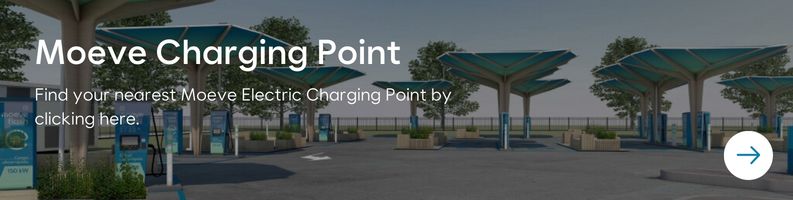
- Charging stations: With your range in mind, it's time to map out the charging stations along your route. Apps and websites such as Electromaps or Chargemap show you the location of charging points, connector types, charging power and real-time availability. Make sure the stations are compatible with your car, and prioritise fast or ultra-fast chargers (such as those at Moeve) to keep waiting times to a minimum.
To find all Moeve charging points, download the Moeve app and become a Moeve gow member.
- Charging time: How long your car takes to charge depends on the charger's power output and the current state of the battery. Batteries charge faster when they're low or at mid-level. Plan your stops based on the estimated charging duration and the power available at each station.
- Weather conditions: Extreme cold or heat can affect battery range. In winter, your range may drop significantly, so plan for more frequent charging stops and consider pre-conditioning the battery before you set off, if your car supports it.
- Route profile: Hills, descents and road type all affect energy consumption. A mountainous route will use considerably more energy than a flat one. Factor in the terrain when planning your route and assessing the range you have available.
Strategies to save time and avoid unnecessary stops
Of course, we all want the journey to feel enjoyable rather than drawn out, and to reach our destination as quickly and safely as possible without stopping more than we need to. Here's how to make that happen:
- Plan strategic stops: Combine charging stops with other activities, such as rest breaks, meals or a bit of sightseeing (if you're not in a rush), to make the most of your time on the road.
- Optimise speed and consumption: Keeping a steady speed and avoiding sudden acceleration or sharp braking reduces energy consumption.
- Charge whenever you stop: Take advantage of every stop to top up the battery, even if it's not running low, to keep your range as high as possible.
What should you do if your battery runs out mid-journey?
Much of our planning is aimed at making sure we never run out of battery, but sometimes the very thing we're trying to avoid can still happen. Don't worry. Here's what to do:
- Find the nearest charging station: Use an app or map to locate the closest option.
- Roadside assistance: Some insurance policies or breakdown services include emergency charging. Check what cover you have and what services are included.
- Emergency solutions: A portable charger with jump leads can come in handy in a pinch.
All in all, planning a long journey in an electric car requires a different approach, but with the right preparation, you can hit the road with complete peace of mind. The ever-growing network of fast and ultra-fast charging stations, combined with improvements in battery range, is making long-distance electric travel easier and more comfortable all the time.