Index
What is electric motorcycle range — and why does it matter?
The range of an electric motorcycle refers to the maximum distance it can travel on a single battery charge. It's a crucial factor for any rider, as it determines freedom of movement and the need to plan charging stops. Understanding your electric motorcycle's real-world range is key to a worry-free riding experience.
The difference between declared and real-world range
It's common for the range declared by manufacturers — based on homologation test cycles — to differ from what you actually experience day to day. These cycles, such as the WLTP (Worldwide Harmonised Light Vehicle Test Procedure), aim to provide a standardised reference for energy consumption and range under controlled conditions. In practice, however, real-world range can vary considerably depending on a number of factors.
Factors that affect electric motorcycle range
Your electric motorcycle's range isn't a fixed number — it's a dynamic value shaped by a variety of elements. Understanding them will help you get the most out of every charge and plan your routes more efficiently.
Speed and riding style
Speed is one of the most significant factors. The faster you ride, the greater the aerodynamic drag — and the more energy you consume. An aggressive riding style, with sharp acceleration and frequent braking, also takes a serious toll on range. On the other hand, smooth, anticipatory riding that makes good use of regenerative braking can significantly extend the distance you're able to cover.
Road type and terrain
Riding on a motorway at high speeds uses more battery than urban or secondary roads. Steep inclines also demand more from the motor and, consequently, more energy. Descents, by contrast, allow energy to be recovered through the regenerative braking system.
Rider weight and load
The more weight the motorcycle is carrying — rider, passenger, luggage — the more energy it needs to move. Avoiding unnecessary loads is a simple but effective way to maximise range. Though the principles apply across the board, lighter always means further.
Weather conditions
Extreme temperatures — whether very cold or very hot — affect battery performance. In winter, the cold reduces battery capacity and charging efficiency; in summer, excessive heat may require more energy to keep the battery cooled.
Battery condition and capacity
A battery in good health and with a higher capacity (measured in kilowatt-hours, or kWh) will deliver greater range. Over time, batteries undergo natural degradation that gradually reduces their maximum capacity.
Basic vehicle and battery maintenance
Avoid fully depleting your battery or regularly charging it to 100%, as both habits can accelerate degradation. The ideal is to keep the charge level between 20% and 80%. While electric motorcycles require far less maintenance than petrol-powered ones, regular check-ups are still important to ensure all components — including the electrical system and battery — remain in good working order.
Smart route planning
Make use of navigation apps such as Google Maps, Waze or Moeve's own Cerca de ti locator, which let you plan your route with available charging points and terrain in mind. A little forward planning goes a long way towards avoiding surprises and making the most of your stops.
How far can you really go on an electric motorcycle?
Real-world range varies enormously depending on the model — from urban scooters with more limited reach to high-performance bikes capable of covering considerable distances.
Range by motorcycle type
Here's a breakdown by category:
- Scooters and urban motorcycles: Designed for everyday city use, these typically offer a range of between 50 and 150 kilometres. They're ideal for short to medium journeys where agility and easy parking take priority — perfect for daily commutes or running errands.
- Sports and higher-performance motorcycles: These models, with larger batteries and more powerful motors, can exceed 200 kilometres of range — and in some cases go further still — making them well suited to longer rides beyond the city. Their design and performance are geared towards a more dynamic riding experience.
- Trail and touring motorcycles: Still less common, but models with greater range are beginning to emerge, built with longer journeys in mind. They feature higher-capacity batteries and optimised energy management systems.
Average range figures from popular brands
While figures vary widely between models and manufacturers, the overall trend is clearly towards greater range. Brands such as Silence, Niu, Zero Motorcycles and LiveWire offer models to suit a range of needs:
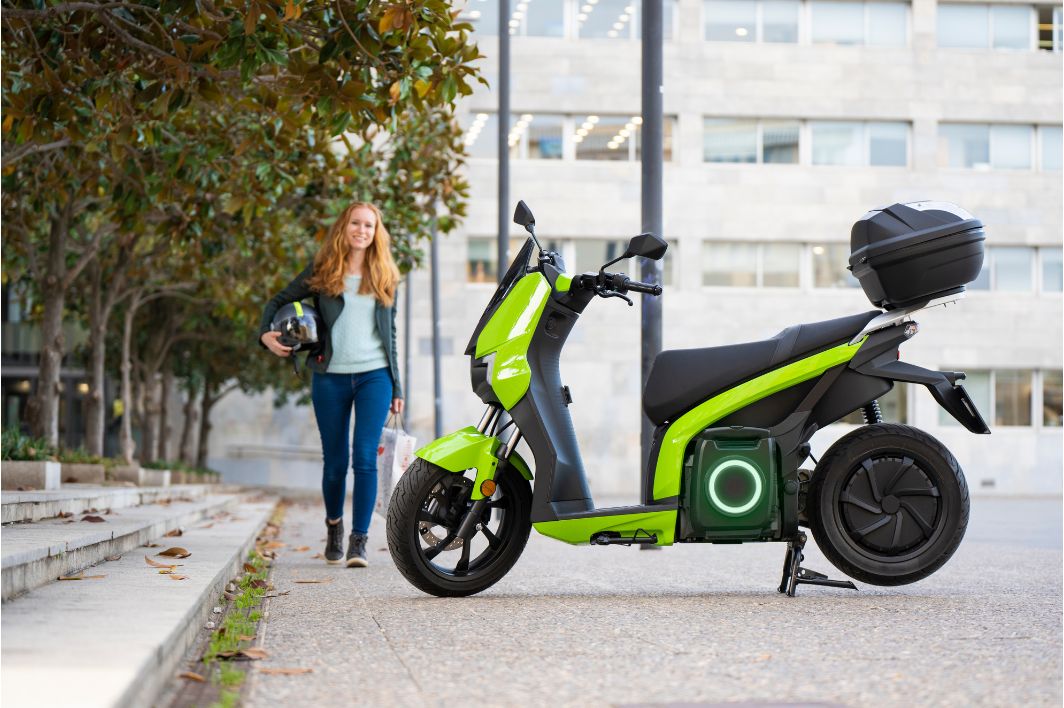
- Silence S01: This popular urban electric scooter delivers a certified range of up to 133 km (WMTC cycle) — a clear example of how technology is advancing to meet the demands of daily life.
- Niu NQi GT: Another urban scooter, with a range of around 100–150 km, ideal for city mobility.
- Zero SR/F: A sports electric motorcycle capable of exceeding 250 km of range on a combined cycle, demonstrating just how far electric bikes have come for more demanding riders.
- LiveWire S2 Del Mar: With an estimated range of around 160 km in the city and slightly less on the road, it strikes a compelling balance between performance and style.
How does this compare to petrol motorcycles?
Petrol motorcycles do offer greater refuelling flexibility and instant range, but electric bikes make a strong case with:
- Lower cost per kilometre.
- Simpler, less frequent maintenance.
- A quieter, emission-free riding experience.
The right choice ultimately depends on your priorities and how you plan to use your bike. Without a clutch or gearbox, electric motorcycles also deliver a smoother, more direct ride.
Where to charge your electric motorcycle on the road
The charging infrastructure for electric motorcycles is growing steadily, making longer trips increasingly straightforward.
Service stations with charging points
Moeve is at the forefront of electric mobility, offering an extensive network of charging points at its service stations. Many of these feature ultra-fast charging, allowing you to top up quickly and safely — with discounts available to help keep your running costs down on the road.
If you're a professional rider or fleet manager, we invite you to discover the advantages of Moeve pro. And if you're an individual customer, you can take advantage of tools and programmes designed to help you save on charging your electric car — such as Moeve gow, which gives you access to exclusive discounts and benefits with every charge, as well as a simpler, more convenient way to manage your payments.
To sum up, range is one of the key factors in the decision to go electric — but as we've seen, it's shaped by a whole host of variables. At Moeve, we're committed to driving electric mobility forward, offering you the tools and infrastructure you need to ride with complete freedom and confidence.