Index
More tips for a safe and efficient May bank holiday
Beyond smart packing, keep these tips in mind to enjoy a smooth, hassle-free May bank holiday on the road:
- Aerodynamics: Anything that disrupts the airflow around your car increases wind resistance, which forces the engine to work harder — and burn more fuel. Think of it like trying to run with a parachute on your back: the bigger it is, the harder every step becomes.
- Weight: A heavier car needs more energy to move. Inertia plays a crucial role here — a heavier object requires more energy to get moving and to change speed. That means more fuel consumed when accelerating, especially on uphill stretches. Every extra kilogram counts.
- Weight distribution: An uneven load can affect your car's stability and increase tyre wear, both of which have a knock-on effect on fuel efficiency. A well-balanced load improves handling and safety — and makes for a more economical drive.

Where should you put your luggage to save fuel?
When it comes to packing efficiently, a few key principles go a long way. Here's how to minimise the impact of your luggage on fuel consumption:
Boot vs. roof rack: which is more efficient?
Whenever possible, go for the boot. Stowing luggage inside is the most aerodynamic option and has the least impact on fuel consumption. A full boot adds weight, yes — but its effect on consumption is minimal compared to other alternatives.
Avoid using a roof rack unless you genuinely need to, as it significantly increases wind resistance. If you do need the extra space, opt for an aerodynamic roof box rather than an open rack.
Roof boxes are designed to reduce air drag — though they'll still increase consumption compared to a clear roofline. Positioning also matters: placing the box further forward can help reduce the impact.
The importance of balancing the load
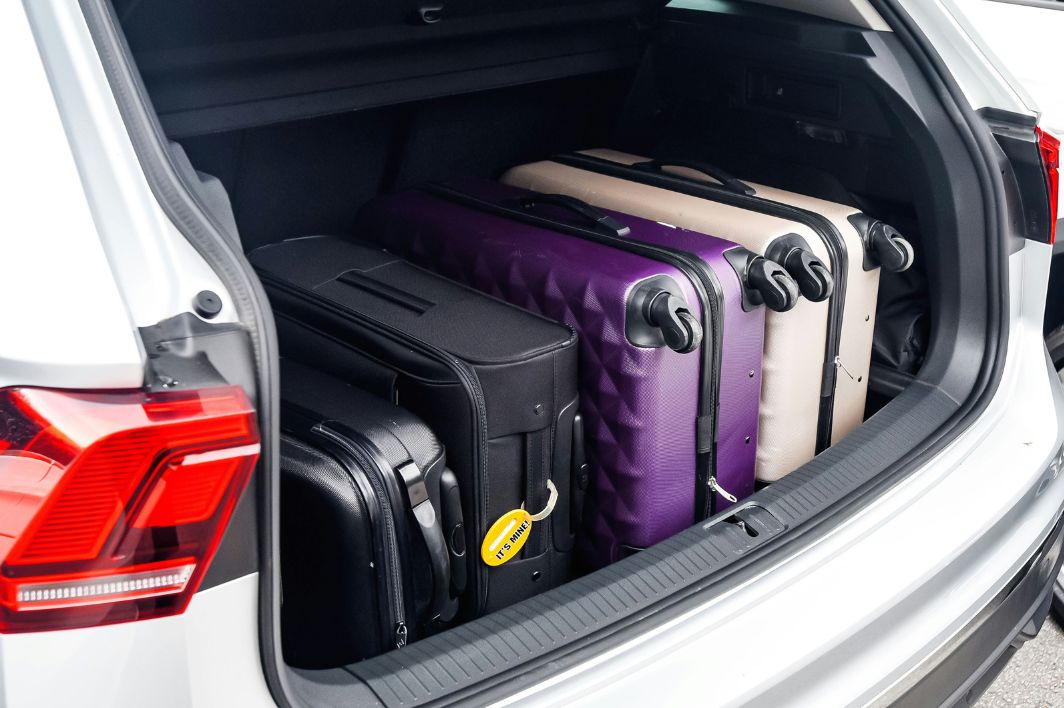
Inside the boot, place heavier items at the bottom and as close to the rear axle as possible. This lowers the car's centre of gravity, improving stability and handling.
Spread the weight evenly on both sides of the car to avoid imbalances that can affect steering and fuel efficiency. Think of it like a seesaw: pile too much on one side and it becomes much harder to keep things steady. The same principle applies to your car.
How to organise your luggage for maximum efficiency
With the right distribution in mind, here's how to pack practically:
- Use soft bags instead of hard-shell suitcases. They adapt more easily to the shape of the boot, filling gaps more efficiently and improving weight distribution.
- Use vacuum-seal bags to compress clothing and reduce the overall volume of your luggage.
- Secure everything properly to prevent items from shifting during the journey, which can affect stability. Use cargo nets, straps or bungee cords to keep things in place.
- Keep the cabin clear of loose objects that could become dangerous projectiles in the event of sudden braking.

Common mistakes that increase fuel consumption
It's easy to overlook a few habits that end up costing you at the pump. Here are the most common ones — and how to avoid them:
Carrying rooftop luggage when you don't need to
As we've mentioned, a roof rack increases wind resistance and fuel consumption. Use it only when absolutely necessary, and remove it when it's not in use. Even an empty rack adds drag — so if it's not serving a purpose, take it off.
Loading up with unnecessary weight
Take a good look in your boot and remove anything that isn't essential for the trip. Every kilogram counts, especially on long journeys, and it will help you estimate your fuel consumption.
Forgetting to check tyre pressure before you leave
Always check your tyre pressure before setting off, particularly if you're carrying a heavy load. Under-inflated tyres increase rolling resistance and fuel consumption. Consult your car's manual for the recommended pressure based on the load you're carrying.
More tips for a safe and efficient May bank holiday
Beyond smart packing, keep these tips in mind to enjoy a smooth, hassle-free May bank holiday on the road:
- Give your car a once-over: Check tyre condition, brakes, lights and fluid levels before you leave.
- Plan your route: Avoid peak travel times and known congestion spots. Use a real-time traffic app to stay one step ahead.
- Take a break every two hours: Stop regularly to stretch, hydrate and rest your eyes. Take the opportunity to pull into one of our Moeve Service Stations and enjoy a coffee.
- Drive with care: Observe traffic regulations, keep a safe following distance, and adjust your speed to road conditions.
Put these tips into practice and you'll soon discover what a difference smart, mindful driving can make this May bank holiday. Safe travels!