Index
What is the minimum legal tyre tread depth?
Road safety is a priority, and the regulations are perfectly clear on this point. In Spain, the minimum legal tread depth is 1.6 millimetres. This limit isn't arbitrary: below this threshold, a tyre loses its ability to channel water effectively, which significantly increases the risk of aquaplaning — particularly in wet conditions.
While the 1.6 mm legal limit applies across the country, it's worth being extra cautious in areas with rainy climates or where snow is common. In those conditions, greater tread depth provides added grip and a welcome extra layer of safety.
Falling short of this requirement has real consequences. Driving with tyres below the minimum tread depth is classified as a serious offence and can result in a €200 fine per non-compliant tyre. Worn tyres can also lead to a failed MOT, so it's something you should check before taking your car in for its inspection — even if you decide to bring the date forward.
How to measure tyre tread depth easily
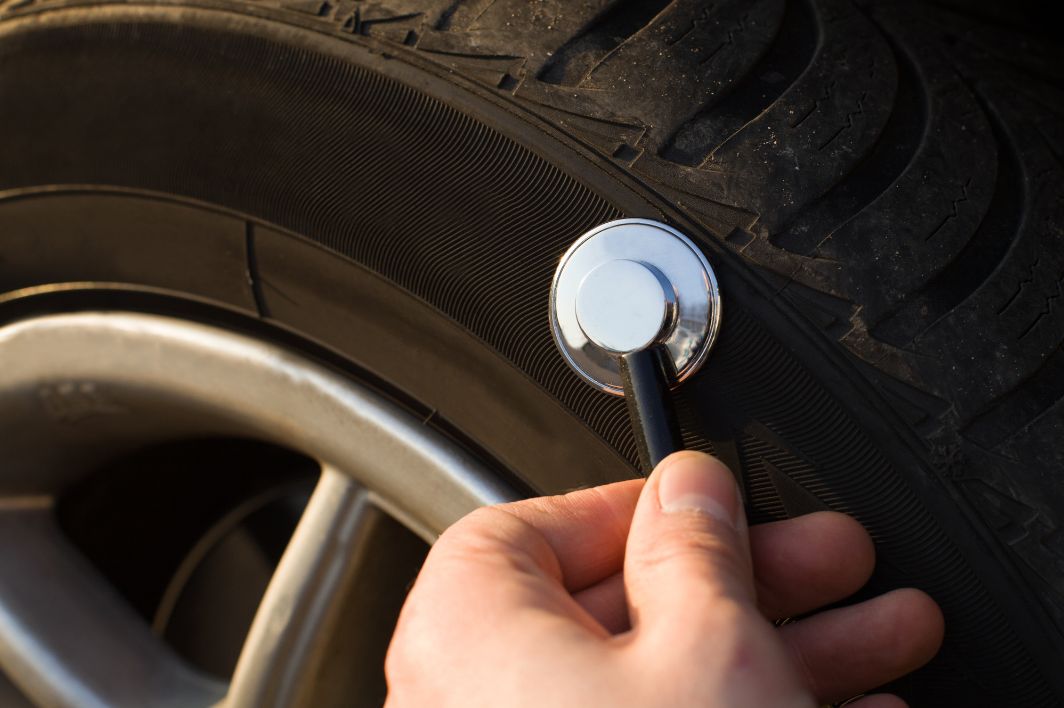
You don't need to be a mechanical expert to check the condition of your tyres. There are several simple methods you can do yourself in just a few minutes:
- The 1-euro coin trick: This is the most well-known and effective DIY method. Insert a one-euro coin into one of the main tread grooves. If you can see the full gold rim of the coin, that's a warning sign: the depth is below 3 mm and, while still technically legal, the tyre is starting to lose its effectiveness. If the gold part is covered by the rubber — you're in the clear. Your tyre still has life in it.
- Tread Wear Indicators (TWI): Most modern tyres feature small rubber blocks set into the bottom of the main grooves, known as Tread Wear Indicators (TWI). When the tyre surface is flush with these markers, you've reached the legal limit of 1.6 mm and need to replace your tyres straight away.
- A tread depth gauge: For maximum accuracy, you can pick up a tread depth gauge at any automotive shop. It's an inexpensive, easy-to-use tool that gives you a precise reading of your tyre tread depth.

What happens if your tyres don't meet the minimum tread depth?
Driving with tyres below the legal limit doesn't just expose you to fines — more importantly, it seriously compromises your safety and that of everyone else on the road. Worn tyres:
- Increase stopping distances: Especially on wet surfaces, a tyre with low tread needs significantly more distance to bring the vehicle to a complete stop.
- Raise the risk of aquaplaning: The tyre's ability to channel water is drastically reduced, causing the car to "float" on the surface and resulting in a loss of control.
- Reduce grip: Traction in corners and on slippery surfaces such as snow or ice is seriously affected.
- Can cause noise and vibrations: If the wear is uneven — a problem known as "cupping" or "saw-tooth wear" — the contact patch with the road becomes irregular, producing an uncomfortable humming or vibration that worsens at higher speeds.
- Increase fuel consumption: Tyres in poor condition can affect rolling resistance and, in turn, engine performance, causing your car to consume more fuel. If you want to understand how to calculate your car's fuel consumption, keeping your tyres in good shape is an essential starting point.
Tips for keeping your tyres in good condition
To extend the life of your tyres and keep them performing at their best, here are some habits worth building into your routine:
- Check the pressure monthly: Knowing your tyre pressure and keeping it at the manufacturer's recommended levels is crucial. Incorrect pressure leads to uneven, premature wear.
- Drive smoothly: Avoid sudden acceleration, harsh braking and taking corners at speed. Efficient driving not only saves fuel — it also takes care of your tyres.
- Check alignment and balancing: If you notice vibrations in the steering wheel or the car pulling to one side, you may need a wheel alignment. Correct balancing and alignment ensure even tyre wear across all four.
- Rotate your tyres: Swapping the position of your tyres — front to back — every 10,000 to 15,000 kilometres helps distribute wear more evenly.

Frequently asked questions about tyre tread depth
Even with all the information to hand, specific questions about tyre maintenance and regulations can still come up. Here are the most common ones, answered at a glance.
How often should I check my tyre tread depth?
Ideally, once a month — at the same time as you check the pressure. It's also an essential check before setting off on any long journey.
Is the minimum depth different for winter tyres?
The legal limit remains 1.6 mm. However, for winter tyres to be truly effective on snow and ice, it's recommended that the tread depth doesn't fall below 4 mm. Below that, they lose a significant amount of their traction capability. And on that note — do you know what happens if you use winter tyres in summer?
Do all four tyres need to be replaced at the same time?
It's not a legal requirement, but it is strongly recommended to change them at least in pairs — meaning both tyres on the same axle (front or rear). This ensures balanced, safe vehicle handling.
How long do tyres last before reaching the minimum tread depth?
Lifespan varies considerably. It depends on factors such as the type of tyre, your driving style, vehicle maintenance and the kinds of roads you regularly drive on. As a general reference, quality tyres can last between 40,000 and 60,000 kilometres — though this is only an estimate.
Does the minimum tread depth also apply to the spare tyre?
Yes, if it's a full-size spare. If your car carries a space-saver or temporary spare — commonly known as a "donut" — this comes with its own speed and distance limitations and is not designed for prolonged use.
In short, checking your tyre tread depth is a simple habit that brings real peace of mind. We encourage you to make it part of your regular car maintenance routine. Your safety — and that of the people you care about — always comes first.