Index
What do you need to charge your electric car on the street?
Unlike a traditional fuel stop, public charging requires you to bring a couple of key items on every journey:
Your smartphone: the key to charging apps
- Full control: Most charging points are activated through a mobile app.
- Quick and easy: With the Moeve app, you can locate charging points, start a session and manage payments quickly and securely from your phone.
The charging cable: when do you need to bring your own?
- Fast and ultra-fast charging (DC): The cable is already built into the charging post itself.
- Slow or semi-fast charging (AC): The post only provides a socket, so you'll need to bring your own Type 2 (Mennekes) cable from the boot. Find out more in our guide to electric car connector types.

Step-by-step guide: how to charge an electric car on the street
With everything ready, let's walk through the exact steps to recharge your vehicle's battery without any hassle.
Step 1. Find the nearest charging point
Use your app as an electric car route planner. On the map, you'll be able to see the exact location, the charger's power output, the connector type and whether the bay is free or occupied in real time.
Step 2. Park correctly and unlock the post
Park so that your car's charging port is close to the charger. Open the Moeve app (or tap your RFID card) to identify yourself, select the socket you're going to use and the post will unlock instantly.
Step 3. Connect the cable and confirm the charging session has started
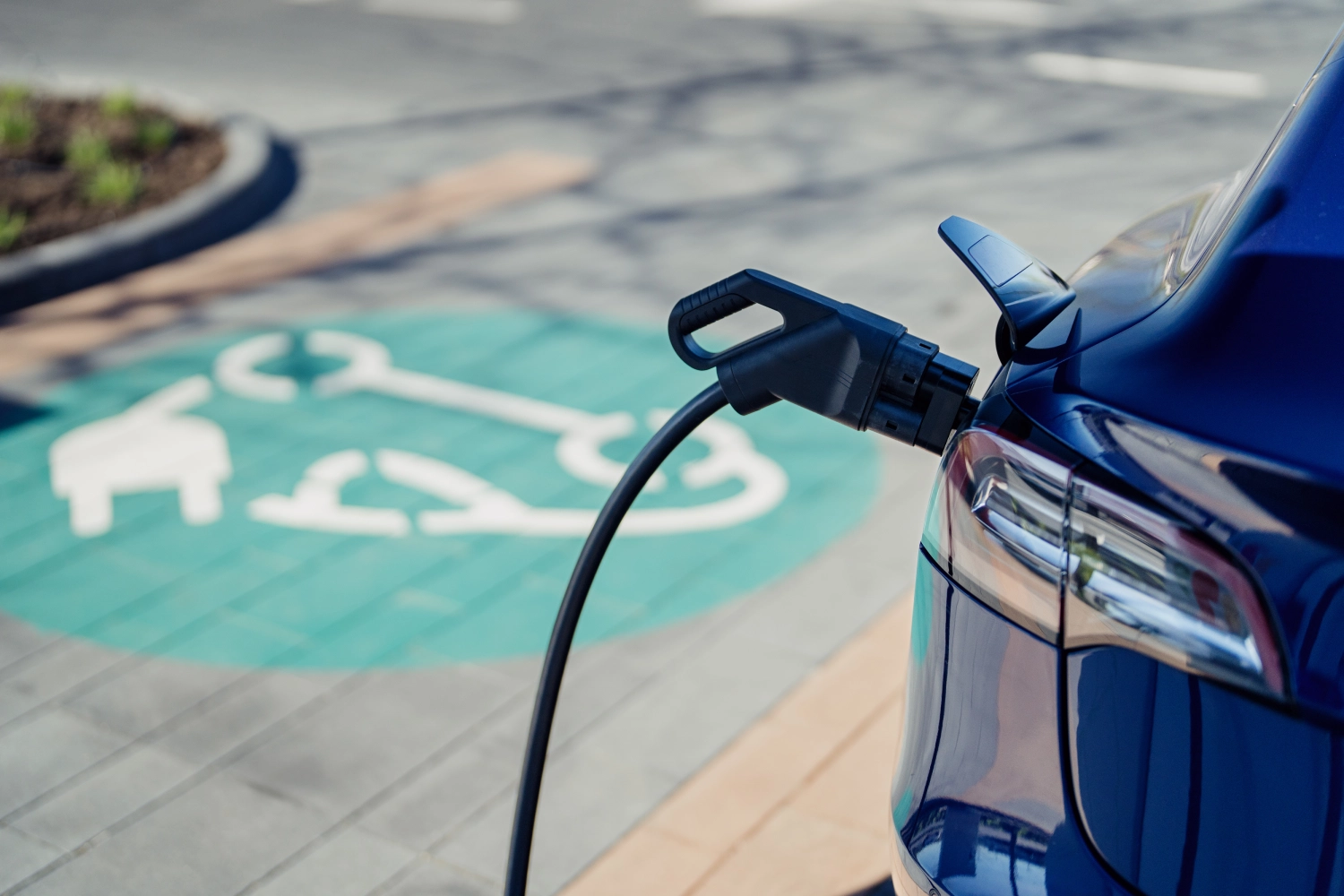
Plug in the cable. You'll hear a security click. The lights on both the car and the post (usually green or blue) will confirm that energy is flowing. Remember that good electric car battery maintenance starts with keeping the connections clean at all times.
Step 4. End the session and free up the bay
Never try to yank the cable out by force. End the session through the app or your vehicle's screen. Once unlocked, remove the cable, store it away and leave the space free for the next user.
How long does it take to charge an electric car on the street?
The waiting time will depend on the post's power output and your battery capacity:
- Urban semi-fast charging (11 kW-22 kW): Ideal for leaving your car plugged in while you go to the cinema or do some shopping. In a couple of hours, you'll have enough range for your daily commutes all week long.
- Ultra-fast charging (150 kW or more): Designed for long journeys. At chargers like those on the Moeve network, you can go from 10% to 80% battery in just 20 to 30 minutes.
Good practices: "etiquette" at public charging points
As you learn how to charge an electric car on the street, it's also important to know the basic rules of courtesy:
- Don't use the bay as a parking spot: Move your car as soon as charging is complete. It's not a free car park.
- Take care of the equipment: Don't leave cables on the ground where they can get damaged.
- Park within the lines: Make it easy for the vehicle next to you to plug in comfortably.
The Moeve charging network: charge your electric vehicle wherever you are
At Moeve, we are rolling out one of the most ambitious ultra-fast charging networks on the Iberian Peninsula, both in cities and on the open road. Our goal is to offer you maximum speed powered by 100% renewable energy, so that range anxiety becomes a thing of the past. We encourage you to download the Moeve app and take full control of your energy.

Frequently asked questions about how to charge an electric car on the street
Can I charge my electric car on the street when it's raining?
Yes. The system (cable, post and car) is completely weatherproof and features safety sensors that prevent the flow of electricity if any anomaly or leak is detected.
Is it more expensive to charge an electric car on the street than at home?
Generally speaking, public rates are higher due to the infrastructure and charging speed involved. However, you can optimise costs by taking advantage of Moeve's loyalty plans..
What happens if someone unplugs my electric car on the street?
It's impossible. The system mechanically locks the connector. No one can unplug it or interrupt the charging session without your authorisation through the app or without the vehicle's keys.
As you can see, learning how to charge an electric car on the street is simply a matter of getting familiar with a few straightforward steps and bringing the right tools with you. Not having a private garage is no longer a barrier to enjoying cleaner, more efficient and quieter driving. See you at your next charge!