Index
What is perpendicular parking?
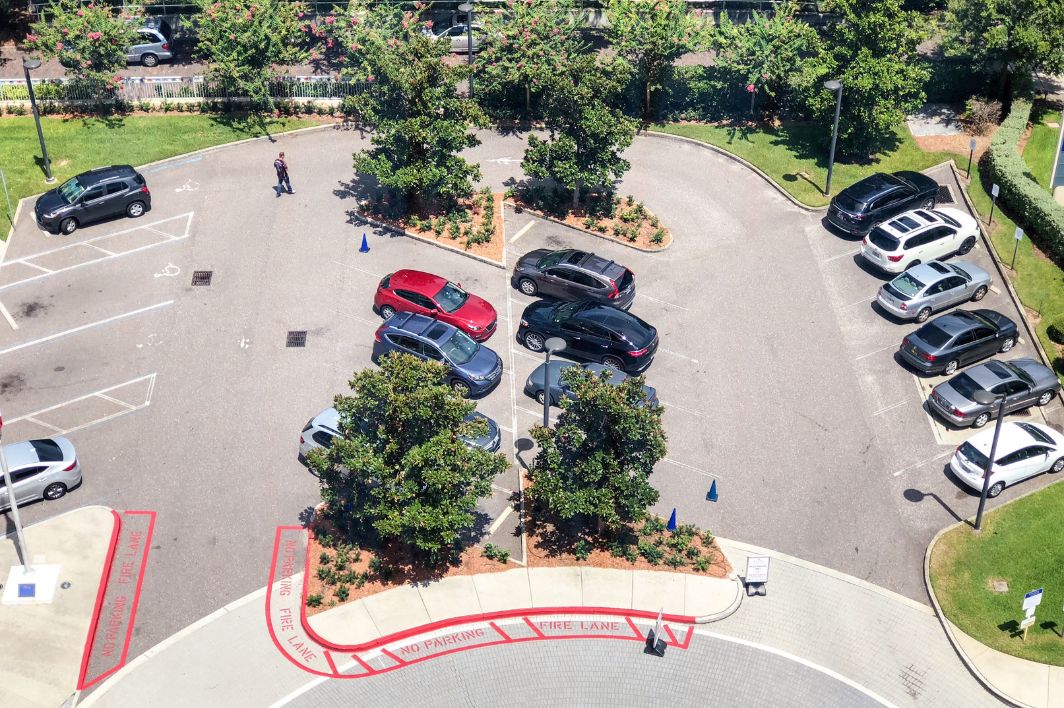
Perpendicular parking, also known as bay parking, means positioning your vehicle at a 90-degree angle to the kerb. It's the most common format in shopping centre and supermarket car parks, as it makes the most efficient use of space.
Unlike parallel parking (where you pull up alongside the kerb), this technique requires a different kind of turning manoeuvre. It can be done in two ways: reversing in (the recommended approach) or pulling in forwards.
How to bay park step by step
Mastering this manoeuvre is a matter of practice and, above all, having your reference points clearly in mind. Here's how both methods work.
How to reverse into a bay (the recommended method)
Reversing into a bay may feel more daunting at first, but it's actually the safest and most efficient approach. It gives you far greater visibility when pulling out, and allows you to enter the space with greater precision.
- Signal and position yourself: Indicate. Drive past the empty bay and stop once the rear of your car is level with the rear line of the second parked vehicle next to your space, keeping a lateral distance of roughly one and a half metres.
- Turn the wheel fully: With the car stationary, turn the steering wheel all the way in the direction of the bay.
- Reverse slowly: Begin reversing at a gentle pace, using all three mirrors to monitor your surroundings and avoid clipping the adjacent car.
- Straighten up: Once your car is straight and parallel with the vehicles on either side, straighten the wheel and continue reversing until you're properly positioned.
- Adjust if needed: If necessary, ease the car slightly forwards or backwards to centre it within the bay.
How to pull forwards into a bay
While it's less advisable due to the difficulty of pulling out, driving forwards into a bay can be useful in very wide car parks or when you're in a hurry.
- Signal and assess the space: Indicate your intention. You'll need quite a bit of lateral room to turn, so make sure no other vehicles are approaching.
- Open the turn and move forwards: Turn the steering wheel fully towards the bay and advance slowly, keeping an eye on the front corner of your car.
- Enter and straighten up: Once you're inside the bay, straighten the wheel and ease forwards carefully, making sure not to hit the wall or the kerb.

Key tips and reference points for the perfect park
Beyond following the steps, there are certain habits and tricks that make the difference between a decent park and a great one.
- Use your visual reference points: The most reliable reference when bay parking is to align the rear axle of your car with the headlight line of the vehicle parked next to your empty bay. As you turn, the wing mirror on that side should pass just by the corner of the other car.
- Trust your mirrors: Keep checking all three mirrors throughout the entire manoeuvre. They're your best allies for judging distances.
- Patience is a virtue: Don't rush. It's far better to take an extra minute and get it right than to save a second and cause a scrape. If it doesn't go to plan first time, return to your starting position and try again. Staying focused and avoiding distractions at the wheel is essential in these moments.
- Practise without pressure: Find a large car park with plenty of free spaces to practise. Repeating the manoeuvre will give you the confidence you need.
Why is reversing into a bay the recommended approach?
Parking this way offers clear advantages, particularly when it comes to safety:
- Visibility when pulling out: Leaving the bay forwards gives you a full view of the road ahead, making it much easier to spot other vehicles, cyclists or pedestrians.
- Manoeuvrability: Reversing into a bay is actually easier to control, as the steering wheels (the front ones) have more room to work with during the manoeuvre.
- Safety: It significantly reduces the risk of an accident when rejoining traffic, as you avoid pulling out blind.
Key regulations to be aware of when bay parking
Parking is a skill, but it's also governed by rules. Always respect the lines that mark the bay, and make sure you don't encroach on neighbouring spaces or obstruct pedestrian thoroughfares. In some cities, specific regulations exist regarding the direction in which you must park (nose-in or reverse-in), often for emissions-related reasons, so always pay attention to local signage.

Frequently asked questions about bay parking
Practice is everything, but it's perfectly normal to still have a few questions. Here are answers to the most common ones.
What if there's a pillar on one side of the bay?
This is a very common scenario. In this case, the pillar becomes your main reference point. Try to approach the bay leaving a little extra room on the pillar side, and use it as a guide in your wing mirror as you turn. It's better for your car to sit slightly closer to the vehicle on the other side (as long as both doors can still be opened) than to risk scraping the pillar.
Can cars with parking assist park in a bay automatically?
Yes, many modern vehicles fitted with parking assist systems can carry out a bay parking manoeuvre automatically or semi-automatically. The system uses sensors to measure the available space and calculates the steering input on its own. It's a great feature that reduces stress and improves accuracy.
To sum up, parking well is a skill that improves with practice. Follow these tips, stay patient, and you'll soon find that bay parking becomes second nature. Happy driving!