Index
Why is driving tired or drowsy so dangerous?
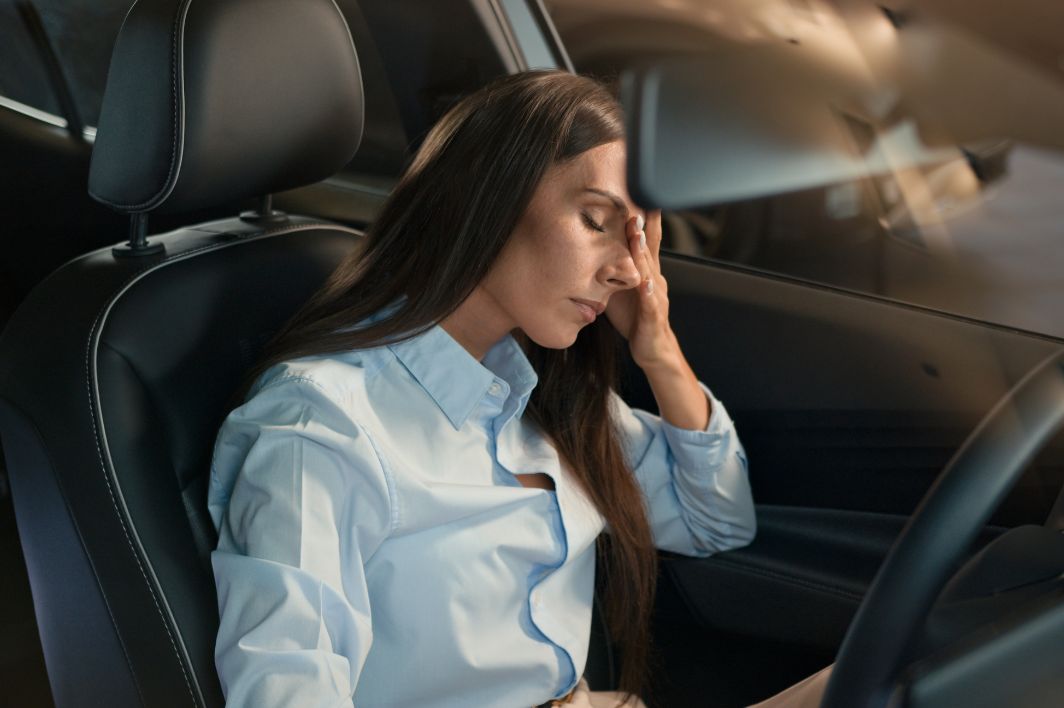
When we talk about how sleep deprivation and fatigue affect driving, we're not simply referring to the risk of closing your eyes and nodding off. The danger begins long before that. Fatigue affects the brain in much the same way as alcohol:
- Reduced concentration: Staying focused on the road, road signs and other vehicles becomes a genuine challenge. You might miss a stop sign or fail to notice the car braking ahead of you.
- Slower reaction times: Your reflexes take a hit. The time it takes you to brake or steer away from an unexpected hazard increases significantly, and on the road, every second counts.
- Impaired decision-making: Tiredness makes us more irritable, less patient and more prone to poor judgements.
- Affected motor coordination: Simple actions like keeping the car in your lane or navigating a bend become less precise.
According to data from the DGT, drowsiness is directly or indirectly involved in between 15% and 30% of road accidents in Spain. A sobering statistic that shows that knowing how to stay awake at the wheel is quite literally a matter of life and death.

Warning signs that you're falling asleep at the wheel
Your body is wise and sends you warning signals long before you slip into a microsleep. Learning to recognise them is key to acting in time. Watch out for the following:
- Constant blinking and heavy eyelids.
- Difficulty focusing or blurred vision.
- Repeated yawning and a feeling of restlessness.
- A constant urge to shift position in your seat.
- Losing track of time or the distance you've covered.
- Head-nodding or difficulty keeping your head upright.
- Unintentional lane drifting, even minor.
If you notice several of these signs at once, the message is clear: your body is urging you to stop.
Tips to avoid falling asleep at the wheel
Prevention is, without doubt, the best strategy. Here are some practical guidelines to help you keep fatigue at bay throughout your journey.
Before you set off:
- Get enough rest: This is the golden rule. Make sure you've had at least 7 to 8 hours of sleep the night before your trip.
- Avoid heavy meals: A large meal slows digestion and brings on drowsiness. Go for something light before getting behind the wheel. Knowing what to eat on a road trip is just as important as knowing the route.
- Plan your route: Knowing the road ahead and identifying possible rest areas will help you organise your stops. At Moeve, our Service Stations are fully equipped for a proper break, a refuel and a chance to recharge.
- Don't set rigid arrival times: The pressure of reaching your destination at a specific time can push you to ignore the warning signs of fatigue.
During the journey:
- Stop every 2 hours or 200 km: This is the most consistently recommended advice, and the most effective. Stretch your legs, get some fresh air and take a proper break for 15 to 20 minutes.
- Keep a comfortable temperature: Excessive warmth inside the car makes drowsiness worse. Ventilate regularly or use the air conditioning.
- Stay hydrated: Drink water or soft drinks at regular intervals. Dehydration is another key cause of fatigue.
- If you're travelling with company, keep the conversation going: Talking with your co-pilot is one of the most effective ways to keep your mind engaged.

When is the right time to stop and rest?
The answer is straightforward: as soon as the first signs of fatigue described above begin to appear. Don't try to push on a little further to the next exit or until you reach your destination. That decision can be fatal.
Knowing when it's dangerous to keep driving is crucial. If you find yourself drifting into the oncoming lane, if you've had a head-nodding moment, or if you can't recall the last stretch of road you've driven, the risk is at its highest.
The only 100% safe solution is to stop. Find a safe place, such as one of our Moeve Service Stations, and rest. A 20 to 30-minute nap can make all the difference, leaving you refreshed and ready to continue your journey safely.
Frequently asked questions about sleep and driving
There are many myths and misconceptions around this topic. Here are the answers to the most common ones.
Is it safe to drink coffee or energy drinks to avoid drowsiness?
Coffee, tea and caffeinated drinks can help you feel more alert in the short term, but they don't eliminate tiredness. Their effect is limited, and when it wears off, fatigue can come back even more suddenly. Use them as a quick pick-me-up during a stop, but never as a substitute for proper rest.
What should I do if I can't stop and I'm feeling tired?
This is a high-risk situation you should avoid at all costs. If you find yourself in it due to an emergency, take these temporary measures immediately while looking for the first safe place to pull over:
- Open the windows to let in cool air.
- Turn up the music.
- Listen to a podcast that demands your full attention.
That said, we want to be clear: these are emergency measures and do not guarantee your safety. The absolute priority is to stop the vehicle.
What built-in systems does my car have to protect me in these situations?
Modern cars are equipped with an ADAS system. This is a set of electronic driver assistance features that operate in a continuous cycle of "see, think and act". The sensors "see" what's happening around the vehicle, the system "thinks" and assesses the risks, and finally "acts" to keep you safe and optimise your driving.
When it comes to staying awake at the wheel, prevention and a sense of responsibility are clearly the best approach. Listen to your body, plan your trips, and remember that Moeve Service Stations are always there to offer you a place to pause and continue your journey with complete peace of mind.