Index
Why does a car rust?
Rust is the result of a chemical reaction between the iron in steel, oxygen and water. When the protective paint layer is damaged by a scratch or a knock, the metal is left exposed and the corrosion process begins.
Common causes of rust in cars:
- Scratches and knocks: These are the most frequent cause and the starting point for corrosion.
- External agents: The acidity of bird droppings or tree sap can damage the lacquer if not removed promptly. A good car wash is your best line of defence.
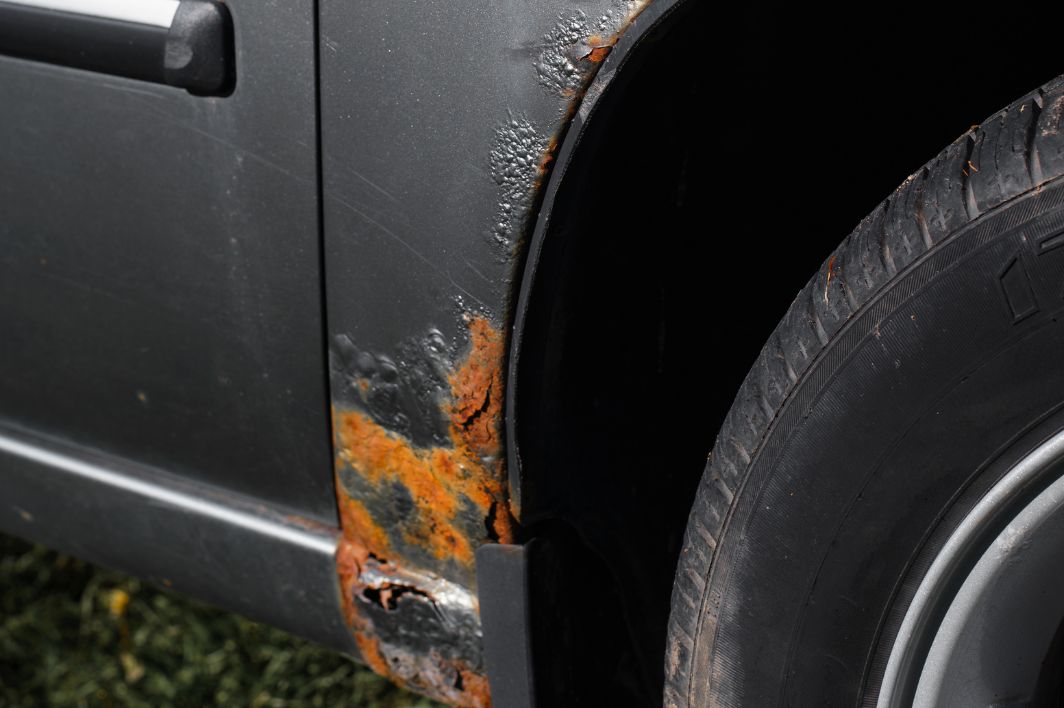
- Moisture build-up: Areas such as wheel arches and the underbody tend to collect mud and water, creating the perfect conditions for rust to take hold.
In addition, factors such as humid or coastal climates accelerate the process due to salt in the air. The same applies in winter, when road salt used to combat ice gets onto your vehicle. This combination is the main enemy when it comes to keeping rust at bay.
How to remove rust from your car: step by step
Before you get started, it's essential to gather all the necessary materials and work in a well-ventilated, well-lit space. Safety first.
What you'll need
- Safety gloves and protective goggles.
- Masking tape and plastic sheeting or protective paper.
- Degreaser, or soap and water.
- Sandpaper in various grits (coarse, medium and fine), or a wire brush attachment for a drill.
- Rust converter.
- Anti-corrosion primer.
- Paint in your car's colour (the code is usually found on the door frame).
- Clear varnish or lacquer.
- Microfibre cloths.
Repairing rust on car bodywork
Removing rust from your car's bodywork is a meticulous process, but following these steps will give you a quality finish.
- Clean and prepare: Wash and thoroughly dry the affected area.
- Protect the surrounding area: Use masking tape to mark off the rusted zone and cover the healthy paintwork with plastic sheeting or paper.
- Sand away the rust: Start with coarse-grit sandpaper or a wire brush to remove the corrosion and any flaking paint. Work through progressively finer grits to smooth the edges until the surface is flat and completely free of rust.
- Apply a rust converter: Wipe away any dust, then apply a thin coat of the product. It will neutralise any invisible traces of corrosion and create a protective layer. Leave to dry according to the manufacturer's instructions.
- Prime the surface: Apply two or three thin coats of anti-corrosion primer to ensure good paint adhesion and add an extra layer of protection. Allow each coat to dry fully before applying the next.
- Paint and varnish: Apply the paint in very thin coats from a distance of roughly 20 to 25 cm. Once dry, finish with one or two coats of clear varnish to add gloss and seal the repair.

Removing rust from the car underbody
Tackling rust on the underbody is less about aesthetics and more about protecting the structural integrity of your vehicle.
- Access and safety: Raise the car with a jack and secure it on axle stands or ramps. Never work under a car supported only by a jack.
- Thorough cleaning: Use a pressure washer to blast away mud, grease and salt. Use a brush for any stubborn areas.
- Rust removal: A wire brush on a drill is your best tool for dealing with heavy rust patches. Follow up with hand sandpaper on hard-to-reach spots.
- Final protection: Once all dust has been removed, apply an anti-corrosion paint or a bitumen-based underseal product specifically designed for underbodies. These are thicker formulations that create a highly durable, waterproof barrier.
How to prevent rust on your car
The best way to avoid having to deal with rust is prevention, built into your regular car maintenance routine.
- Wash your car regularly, paying attention to the underbody, especially in winter or after trips to the coast.
- Apply wax a couple of times a year to protect the paintwork.
- Touch up minor scratches as soon as you spot them using a touch-up pen.
- Avoid parking on damp surfaces such as grass or bare earth.
Frequently asked questions about car rust
After all this information, you may still have a few specific questions. Below, we answer the most common ones that come up when dealing with car rust, so you have everything you need to hand.
Can I repair rust at home, or should I go to a garage?
Whether to tackle the rust yourself or take your car to a specialist depends on how bad it is. For surface-level, localised corrosion, a DIY approach works perfectly well. However, if the rust has eaten through the bodywork or is affecting structural areas such as the chassis or suspension mounts, the safest course of action is to take it to a specialist garage.
What are the best products for removing rust?
Rust converters based on phosphoric acid are highly effective. For subsequent protection, epoxy-based primers provide an excellent foundation before painting.
Can rust affect the safety of my car?
Yes, and very seriously. Rust on the chassis, subframes or suspension mountings weakens the structural integrity of the vehicle. A car with severe structural rust is not only a safety hazard, but will also fail its MOT equivalent (ITV in Spain).
We hope this guide helps you keep rust under control and enjoy your car in top condition. Remember: good maintenance is the best investment you can make to extend the life of your vehicle and keep yourself safe on the road.