Index
Is it legal to drive in safety boots?
Spanish traffic regulations don't explicitly mention safety boots, but they do set out clear requirements for how a driver must be positioned to maintain proper control of the vehicle.
The General Traffic Regulations (Reglamento General de Circulación) state that the driver must at all times be in a condition to properly control their vehicle. Under Article 17.1, any element, including footwear, that could hinder the correct use of the pedals may be considered an infringement.
The Directorate General of Traffic (DGT) establishes that footwear must allow full control of the pedals, not interfere with the necessary movements, provide sufficient sensitivity to modulate pressure, and be securely fastened to the foot.
Safety boots, by virtue of their robust design (reinforced toe cap, thick sole, considerable weight), can fall short of these requirements. If the Civil Guard or local police determine that they hinder safe driving, you could face a fine of up to 200 euros, with no penalty points.
Just as with driving in flip-flops, which are clearly inadvisable, the key requirement is that your footwear allows full control of the vehicle at all times.
Is it safe to drive in safety boots?
Beyond the legal question, the real issue is whether it's actually safe to get behind the wheel in this type of footwear. The answer depends on the type of boots, your experience and the kind of driving involved.
How safety boots affect vehicle control
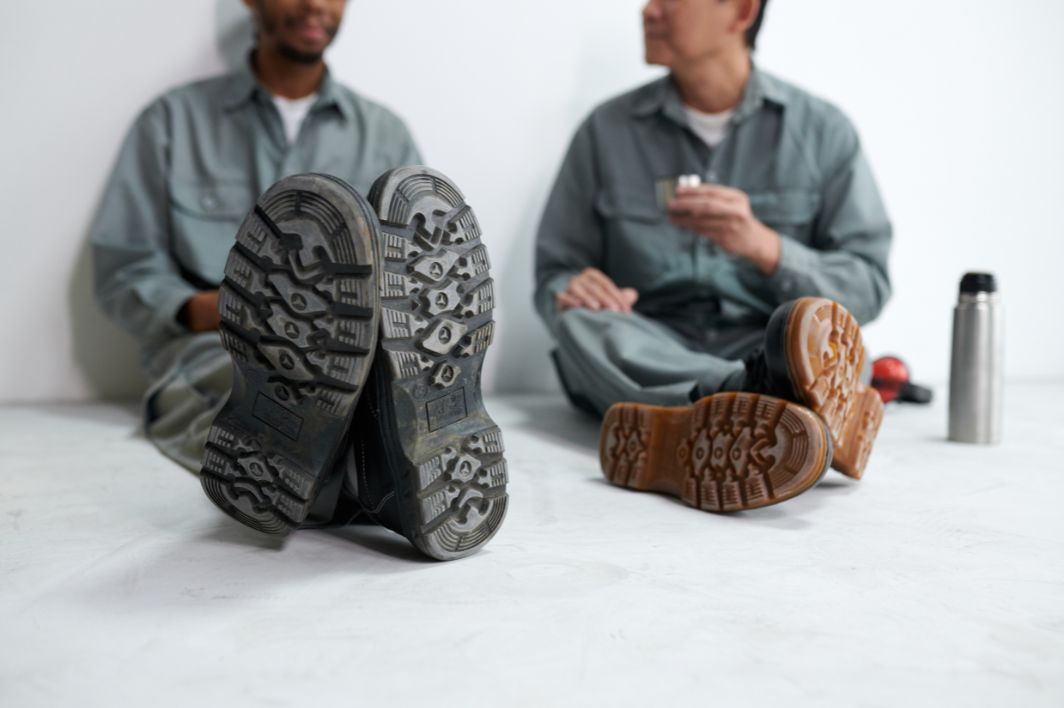
Safety boots are designed to protect your feet in work environments, not for driving. Their specific features can interfere with your ability to handle the car.
- Sole thickness: They typically have soles of 3 to 5 cm, which reduces sensitivity when pressing the pedals and makes it harder to modulate pressure accurately.
- Weight: They can weigh between 800 grams and 1.5 kg per boot, two to three times more than a regular shoe. This added weight causes fatigue and increases reaction time.
- Rigidity: The steel or composite toe cap and the anti-penetration insole make them very stiff, restricting the natural movement of the foot.
- Width: They are wider than regular shoes, increasing the risk of accidentally pressing two pedals at once.
Advantages of wearing safety boots while driving
Although the drawbacks are significant, safety boots can offer some specific benefits behind the wheel.
These include protection in the event of an accident, comfort for very short journeys, time saved by not having to change footwear constantly, and protection when driving industrial vehicles.
Disadvantages of driving in safety boots
The downsides are more numerous and carry a greater impact on safety, as we have seen throughout this article.
To recap, the main drawbacks are: reduced pedal sensitivity, longer reaction times, muscle fatigue on long journeys, the risk of pressing two pedals simultaneously, difficulty with precise manoeuvres, the possibility of a fine, and potential complications with your insurance.

What type of footwear is safest for driving?
Choosing the right footwear can make the difference between driving safely and putting yourself at risk.
- Safety boots: They come with significant limitations. If you must wear them, opt for lighter models with a thinner sole and greater flexibility.
- Sports or casual footwear: Trainers with a thin, flexible sole are an excellent option. They offer good grip, sensitivity and comfort.
- NOT recommended footwear: flip-flops and sandals, high-heeled shoes, very heavy boots, loose-fitting footwear and clogs without a back strap.
The ideal footwear should be closed-toe, lightweight (under 400 grams), with a thin but grippy sole, flexible and well-fitted to the foot.
Tips for driving in safety boots
If you have no choice but to drive in safety boots, these tips will help you minimise the risks.
Check the flexibility of the boots
Not all safety boots are the same, and choosing the right model can make driving considerably safer.
If you're going to drive in them regularly, opt for composite or aluminium toe caps rather than steel, choose thinner soles, look for models with flexibility in the metatarsal area, and go for low-cut boots to allow greater ankle mobility
Keep a spare pair of shoes in the car if you spend long hours driving
The safest option is to keep a spare pair of shoes in the car and change before getting behind the wheel.
Keep a pair of trainers in the boot and swap them before you drive. It only takes a minute and can make a real difference to your safety. This is especially advisable for long motorway journeys, driving in adverse conditions such as rain, snow or ice, and busy urban routes with heavy traffic.
Practise to get used to the footwear
If you need to drive in safety boots and have no opportunity to change, practise first in controlled conditions.
Try it out in an empty car park, practise braking and accelerating, make sure you can press each pedal without catching the one next to it, and start with short trips before tackling longer routes. Always keep a greater safety distance than usual.

Frequently asked questions about driving in safety boots
These are the most common questions on this topic, and ones worth having clear answers to before you get behind the wheel.
What happens if I have an accident while driving in safety boots?
If it is determined that the boots may have affected your reaction time, your insurer could reject or reduce the compensation, you could face additional legal liability, and you could be subject to administrative penalties.
Is it better to change footwear before driving?
Yes, it is definitely the best option. Switching to appropriate footwear is always safer and avoids legal complications. It only takes a minute and could make all the difference in an emergency.
So, can you drive in safety boots? Technically yes, it is not prohibited, but it is neither the most advisable nor the safest choice. The best solution is to keep a spare pair of shoes in the car and change before getting behind the wheel. Your safety and the safety of others always comes first.