Index
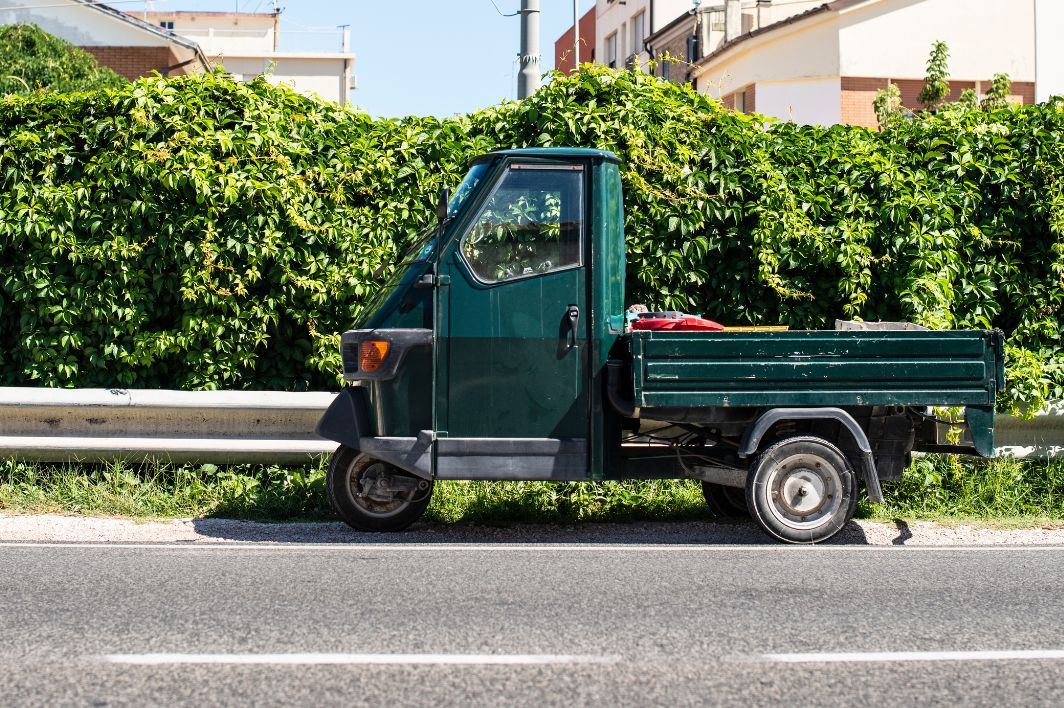
What does the regulations say about three-wheeled vehicles and trailers?
Spain's General Traffic Regulations (Reglamento General de Circulación) do not explicitly prohibit three-wheeled vehicles from towing a trailer. However, they do establish a clear set of conditions that must be met for the practice to be legal. Above all, the regulations aim to ensure the stability of the combined unit and the safety of all road users, preventing risk situations arising from excess weight, speed or poor coupling.
Legal requirements for a three-wheeled vehicle to tow a trailer
For the combination of your three-wheeled vehicle and a trailer to be road-legal, three fundamental conditions must be met — relating to the vehicle itself, the maximum towable weight and the driving licence required.
Approved vehicle type
Not all three-wheeled vehicles are suitable for towing. The key lies in the vehicle's technical data sheet (ficha técnica), where the manufacturer specifies whether the vehicle has been approved for towing and what its Maximum Towable Mass (MMR) is. If the technical data sheet makes no mention of this — or states that the MMR is zero — that vehicle cannot legally tow a trailer.
Maximum permitted towable mass
Once you have confirmed that your vehicle is approved for towing, you must respect the weight limits. General regulations state that the maximum mass of the trailer (including its load) must not exceed 50% of the unladen weight (tare) of the towing vehicle. For example, if your three-wheeler weighs 400 kg, the loaded trailer cannot exceed 200 kg.
Driving licence requirements
The type of driving licence required is also a decisive factor. The possibilities are as follows:
- Licence B: Authorises you to drive a combined unit where the Maximum Authorised Mass (MAM) of the trailer does not exceed 750 kg.
- B-96 authorisation: Required when the trailer's MAM exceeds 750 kg, provided the total MAM of the combined unit does not exceed 4,250 kg.
- B+E licence: Mandatory when the trailer is not a light trailer (MAM over 750 kg) and the full combined unit exceeds 4,250 kg.
Does the trailer need to be type-approved?
Absolutely, yes. Every trailer used on Spanish public roads must be type-approved. This means it must have its own technical data sheet specifying its characteristics and MAM. If the trailer has a MAM exceeding 750 kg (i.e. it is not a light trailer), it must have its own registration plate, independent insurance and pass its own roadworthiness test (ITV).
Safety considerations when towing a trailer with a three-wheeled vehicle
Towing a trailer completely changes the dynamic behaviour of your vehicle. It's crucial to be aware of these changes and take extra precautions at all times.
- Stability of the combined unit: A three-wheeled vehicle is, by nature, less stable than a four-wheeled one. Adding a trailer can compromise stability further, particularly in bends or during sudden manoeuvres.
- Longer braking distance: The additional weight increases inertia and, consequently, the distance needed to stop. You'll need to anticipate braking much earlier than usual.
- Correct load distribution: Place the heaviest items in the central and lowest part of the trailer, directly above the axle.
- Approved coupling system: Always use a type-approved tow ball and coupling -- both for your vehicle and the trailer.
- Environmental factors: Crosswinds and uneven road surfaces have a far greater impact on this type of combination. Reduce your speed and keep a firm grip on the handlebars or steering wheel.
Pros and cons of using a three-wheeled vehicle for towing
Like any decision, adapting your vehicle for towing comes with its advantages and drawbacks. It's worth weighing them up carefully:
Pros:
- Versatility: Increases the load capacity of an already agile vehicle.
- Manoeuvrability: In certain situations, a smaller combined unit is easier to handle.
- Cost-effectiveness: It can be a more economical transport solution than purchasing a van.
Cons:
- Reduced stability: This is the main drawback and the greatest safety risk.
- Limited load capacity: Restricted to 50% of the vehicle's unladen weight.
- Greater sensitivity to external conditions: Wind and poor road surfaces have a more pronounced effect.
Alternatives for carrying loads with a three-wheeled vehicle
If towing a trailer isn't the right option for you, there are other alternatives worth considering:
- Luggage racks or top boxes: Suitable for lighter items, if your vehicle supports them.
- Courier services: For one-off deliveries, this is the simplest and most straightforward option.
- Vehicle rental: For occasional high-volume needs, hiring a van is the most practical solution.
Fines and penalties for improper use of trailers with three-wheeled vehicles
Failing to comply with the regulations can be costly. The most common penalties include:
- Towing a trailer with an unauthorised vehicle: A fine and possible vehicle immobilisation.
- Exceeding the Maximum Towable Mass (MMR): A serious offence carrying fines of between 301 and 4,000 euros.
- Driving without the appropriate licence: A very serious offence.
- Using a non-approved trailer or one without a valid ITV: Fines of up to 500 euros.

Frequently asked questions about towing a trailer with a three-wheeled vehicle
Even with the regulations clearly laid out, specific questions always come up. Here are the answers to the most common ones:
Can I tow a trailer with any three-wheeled vehicle?
No. The vehicle's technical data sheet must explicitly authorise towing and specify the Maximum Towable Mass (MMR). If this information is not included, towing is not legal.
What happens if the trailer is not type-approved
Using a non-approved trailer is illegal. You risk a financial penalty and the immobilisation of your vehicle. What's more, in the event of an accident, your insurance may not cover the damages.
Is there a specific speed limit when towing a trailer with a three-wheeled vehicle?
Yes. The maximum speed for a vehicle towing a trailer is 90 km/h on motorways and dual carriageways, and 80 km/h on all other roads. Always adjust your speed to suit the road conditions, traffic and load.
You now have everything you need to decide whether towing a trailer with your three-wheeled vehicle is the right choice for you. Carrying more load is entirely possible, but doing so responsibly and within the law isn't just one option among many: it's the only way to keep yourself and others safe on the road. With the right information, every journey, however loaded, becomes a safer and more confident experience.